Bacteriostatic Water
$10.00

 Sale
Sale
Make sure you have everything you need.
These items are frequently purchased together.
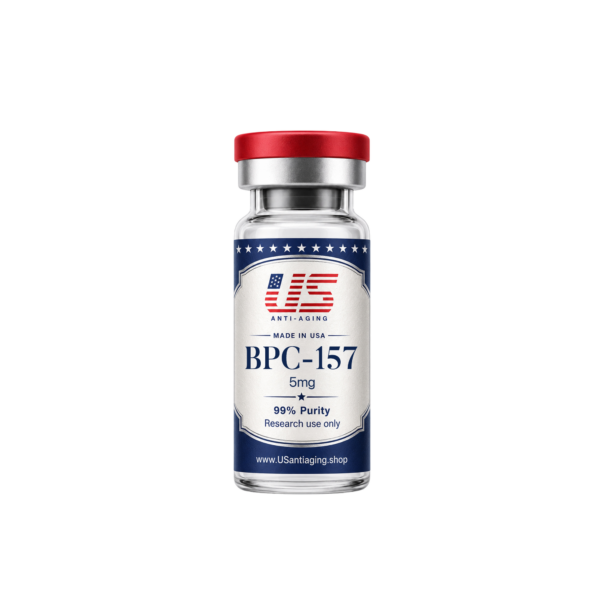
BPC-157 5mg is a synthetic peptide derived from a naturally occurring gastric protein fragment known as Body Protection Compound (BPC). This peptide has attracted considerable scientific interest due to its stability and its potential role in various biological signaling pathways associated with tissue repair and cellular communication.
Researchers have investigated BPC-157 in a wide range of experimental models involving angiogenesis, cellular migration, and extracellular matrix signaling. Because of these properties, the peptide has become a widely studied compound in laboratory research exploring mechanisms of tissue regeneration and peptide-based protective signaling systems.
BPC-157 5mg has been examined in experimental models involving tissue repair and cellular regeneration pathways. Preclinical studies suggest that the peptide may influence signaling mechanisms related to:
collagen production
granulation tissue formation
epithelial cell migration
extracellular matrix remodeling
Researchers continue to study how these mechanisms may contribute to broader biological repair processes.
One area of significant research interest involves BPC-157’s interaction with angiogenic signaling pathways. Experimental studies have explored how the peptide may influence the activity of vascular endothelial growth factor (VEGF), a protein associated with blood vessel development.
Laboratory models suggest that BPC-157 may influence endothelial cell activity and vascular signaling processes involved in the formation of new microvascular networks.
BPC-157 has also been studied in laboratory models involving tendon fibroblast activity and musculoskeletal tissue signaling. Research suggests that the peptide may influence cellular pathways associated with:
fibroblast migration
cytoskeletal organization
focal adhesion kinase (FAK) signaling
paxillin-related pathways involved in cell adhesion
These processes are important areas of investigation in studies of tissue remodeling and musculoskeletal biology.
Because BPC-157 originates from a gastric protein fragment, researchers have also explored its role in gastrointestinal tissue signaling and mucosal biology.
Experimental models have examined how the peptide may interact with biological pathways involved in epithelial integrity, vascular signaling, and tissue stability within the digestive system.
Additional research has investigated the peptide’s interaction with broader biological systems including dopamine signaling, nitric oxide pathways, and prostaglandin-related communication networks.
These interconnected signaling systems are considered important in studies of cellular defense mechanisms and peptide-mediated biological regulation.
Current scientific research involving BPC-157 includes studies related to:
tissue repair and regeneration signaling
angiogenesis and vascular development
musculoskeletal tissue biology
gastrointestinal system signaling
cellular defense and regulatory pathways
These areas continue to be actively explored in peptide research and cellular biology.
Compound: BPC-157
Form: Lyophilized peptide powder
Grade: Research grade
Storage: Refrigerate at 2–8°C before reconstitution
Use: Laboratory research only