Bacteriostatic Water
$10.00

 Sale
Sale
Make sure you have everything you need.
These items are frequently purchased together.
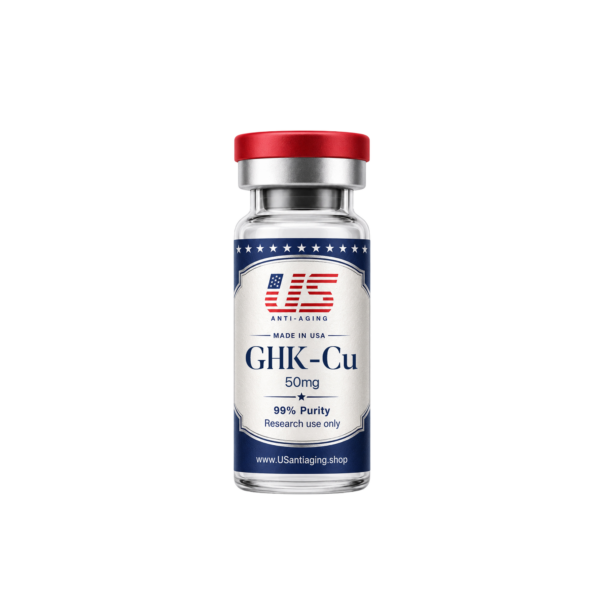
GHK-Cu 50mg is a naturally occurring tripeptide–copper complex composed of the amino acids glycine, histidine, and lysine bound to a copper ion. This peptide was originally discovered in human plasma and has since been widely studied for its role in cellular signaling, tissue remodeling, and regenerative biological pathways.
Researchers have shown that GHK has a strong affinity for copper ions, forming the GHK-Cu complex, which may participate in multiple biological processes including extracellular matrix regulation and cellular communication. Because of these interactions, GHK-Cu has become a peptide of interest in laboratory studies involving tissue biology and regenerative signaling mechanisms.
Experimental studies suggest that GHK-Cu 50mg may interact with pathways involved in collagen synthesis and extracellular matrix regulation. Researchers have explored how the peptide may influence the production of structural proteins and regulatory molecules involved in tissue remodeling.
Laboratory investigations have also examined the peptide’s interaction with matrix metalloproteinases (MMPs) and tissue inhibitors of metalloproteinases (TIMPs), which play important roles in maintaining extracellular matrix balance.
GHK-Cu has been studied in experimental models involving wound healing and vascular development. Research suggests the peptide may influence biological processes associated with:
collagen deposition
neovascularization (formation of new blood vessels)
dermal remodeling
cellular migration and tissue organization
These mechanisms remain active areas of investigation in tissue regeneration research.
Researchers have also investigated the influence of GHK-Cu on gene expression and cellular signaling pathways. Studies suggest that the peptide may regulate genes involved in:
tissue repair mechanisms
DNA repair processes
inflammatory signaling pathways
cellular growth and differentiation
These findings have contributed to ongoing research exploring peptide-mediated biological regulation.
Experimental studies have also examined the activity of GHK-Cu in models involving epithelial tissue integrity and tissue remodeling processes. Researchers continue to explore how copper-binding peptides may influence cellular stability and tissue repair signaling in various biological systems.
Some preclinical studies have investigated GHK-Cu in laboratory models involving behavioral and neurological signaling pathways. These studies aim to better understand how peptide-mediated signaling may interact with neurological regulatory systems.
Current scientific interest in GHK-Cu includes research involving:
extracellular matrix signaling
collagen and tissue remodeling pathways
angiogenesis and vascular biology
gene expression and cellular regulation
peptide-mediated regenerative signaling systems
These areas remain active fields of investigation in peptide and regenerative biology research.
Compound: GHK-Cu (Copper Peptide)
Structure: Glycyl-L-Histidyl-L-Lysine Copper Complex
Form: Lyophilized peptide powder
Grade: Research grade
Storage: Refrigerate at 2–8°C prior to reconstitution
Use: Laboratory research only