
Clinical Research Phases: Understanding Phase 1, Phase 2, Phase 3, and Phase 4 Trials
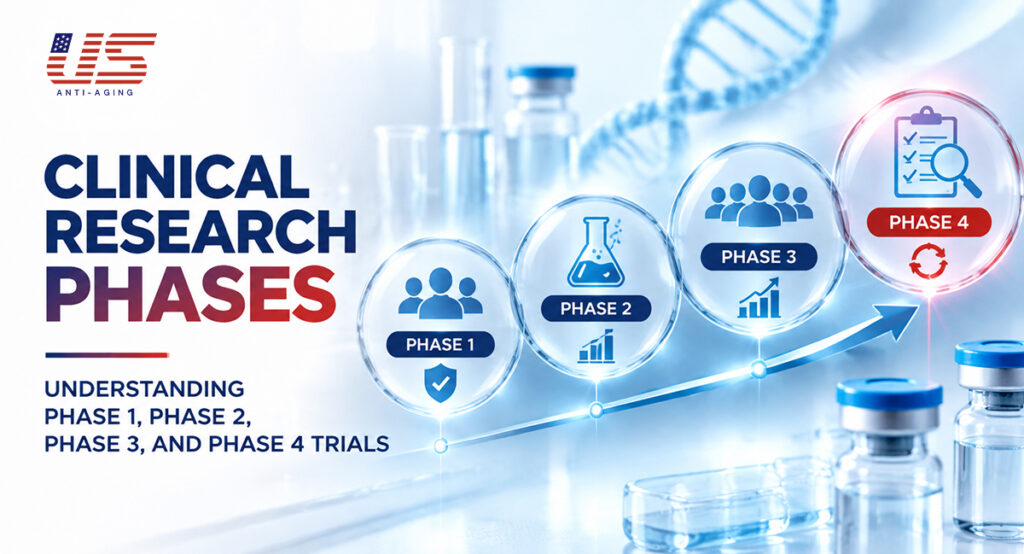
Clinical research phases are stages of human drug development that help scientists evaluate investigational treatments for safety, effectiveness, and appropriate use. Phase 1 primarily examines safety and dosage, Phase 2 explores preliminary efficacy, Phase 3 provides larger-scale evidence of benefits and risks, and Phase 4 investigates approved treatments after they reach the market. Each stage […]
Preclinical Studies: Research Methods, Experimental Models, and Evidence Limitations
Preclinical studies are scientific investigations conducted before human clinical trials to evaluate biological activity, potential toxicity, and the behavior of experimental compounds. Researchers use laboratory assays, cell cultures, computational models, and animal studies when appropriate to identify potential risks and establish whether further investigation is justified. These studies provide essential evidence during drug development. However, […]
Peptide Research: Scientific Methods, Preclinical Studies, and Clinical Evidence
Peptide research is the scientific investigation of peptide molecules, their biological properties, molecular interactions, and potential applications. Scientists use analytical chemistry, laboratory experiments, preclinical models, and human clinical trials to examine how peptides behave and whether specific compounds demonstrate measurable biological activity. However, different research stages produce different types of evidence. Laboratory findings may reveal […]