
Peptides and Angiogenesis: VEGF Signaling, Endothelial Cells, and Research Evidence
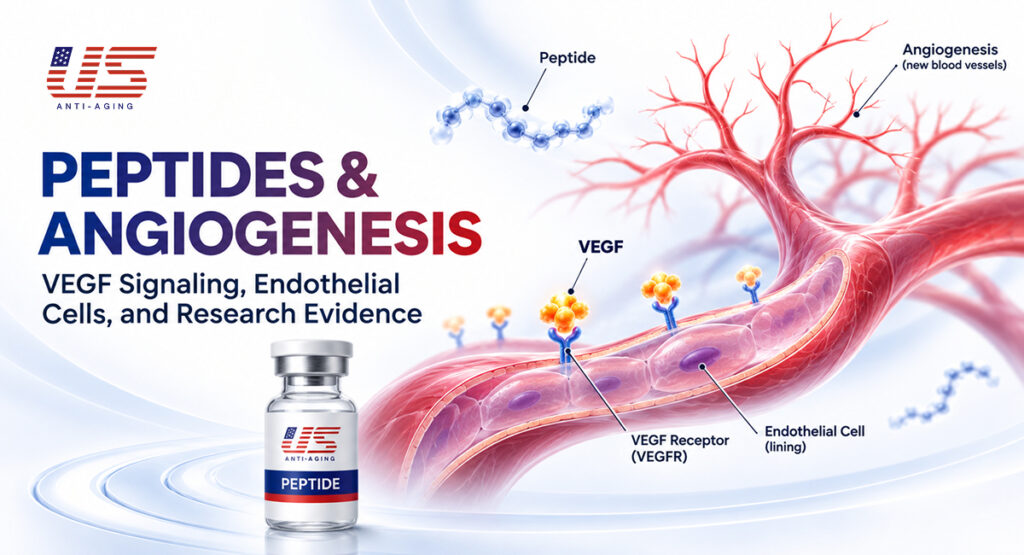
Peptides and angiogenesis represent an important area of biological research examining how peptide molecules influence blood vessel formation, endothelial cell behavior, and vascular signaling. Scientists investigate these interactions through pathways involving vascular endothelial growth factor (VEGF), cellular migration, proliferation, and extracellular matrix remodeling. However, peptides do not universally stimulate angiogenesis. Depending on their molecular structure […]
BPC-157 vs TB-500: Molecular Differences, Research Mechanisms, and Scientific Evidence
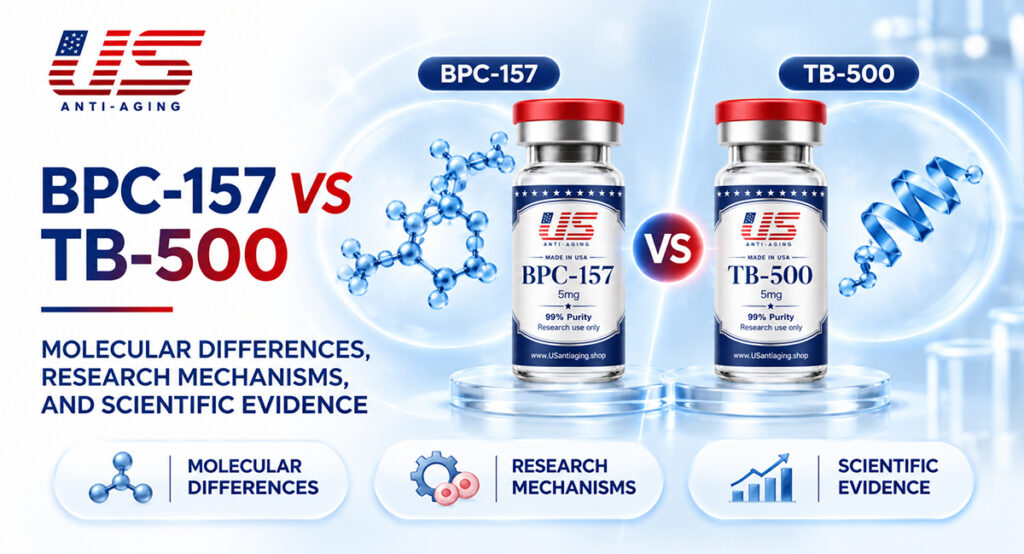
BPC-157 vs TB-500 is a comparison of two investigational peptides with different molecular origins, structures, and research mechanisms. BPC-157 is a synthetic 15-amino-acid peptide studied primarily in experimental injury and cellular signaling models. TB-500 commonly refers to a seven-amino-acid fragment of thymosin beta-4, although researchers and commercial suppliers sometimes use the name for different molecular […]
TB-500 Research: Molecular Structure, Thymosin Beta-4, and Preclinical Evidence
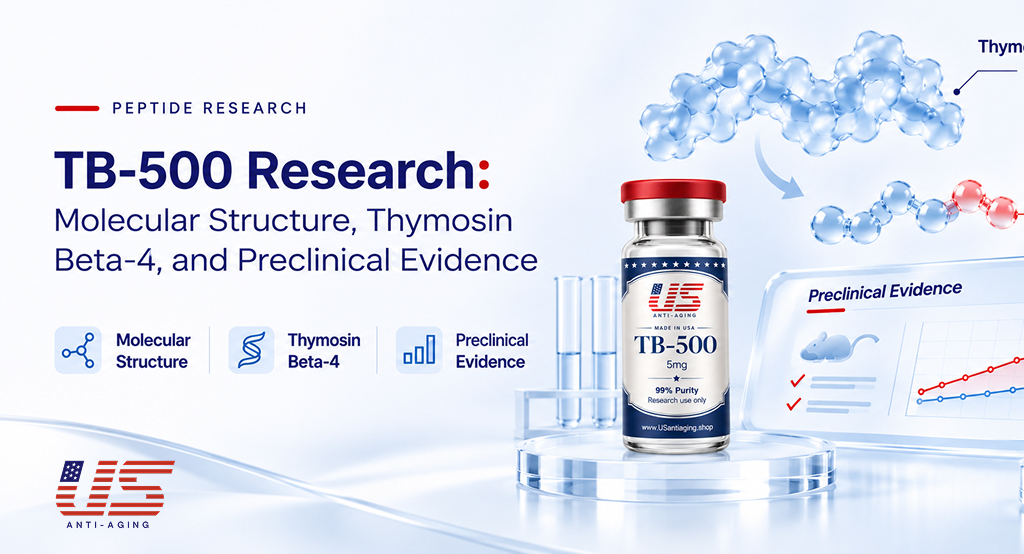
TB-500 research investigates a synthetic peptide fragment derived from thymosin beta-4, a naturally occurring protein involved in actin regulation and cellular movement. Researchers have studied TB-500-related sequences for their molecular characteristics, metabolism, and potential interactions with processes associated with tissue repair. However, an important distinction exists: TB-500 and full-length thymosin beta-4 are not necessarily the […]