
Melanotan II Research: Melanocortin Receptors, Pigmentation, and Scientific Evidence
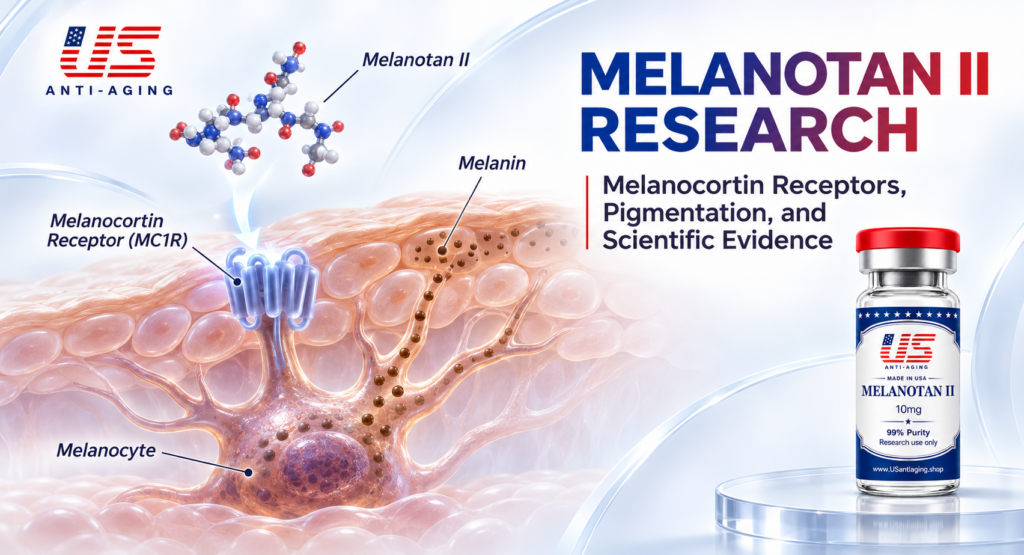
Melanotan II research investigates a synthetic cyclic peptide that interacts with melanocortin receptors involved in pigmentation, energy homeostasis, and other physiological processes. Scientists study Melanotan II, also known as MT-II, to understand receptor activation, intracellular signaling, and melanin production. Unlike compounds designed to target a single receptor, Melanotan II demonstrates activity across several melanocortin receptor […]
GHK-Cu Research: Copper Binding, Cellular Mechanisms, and Scientific Evidence
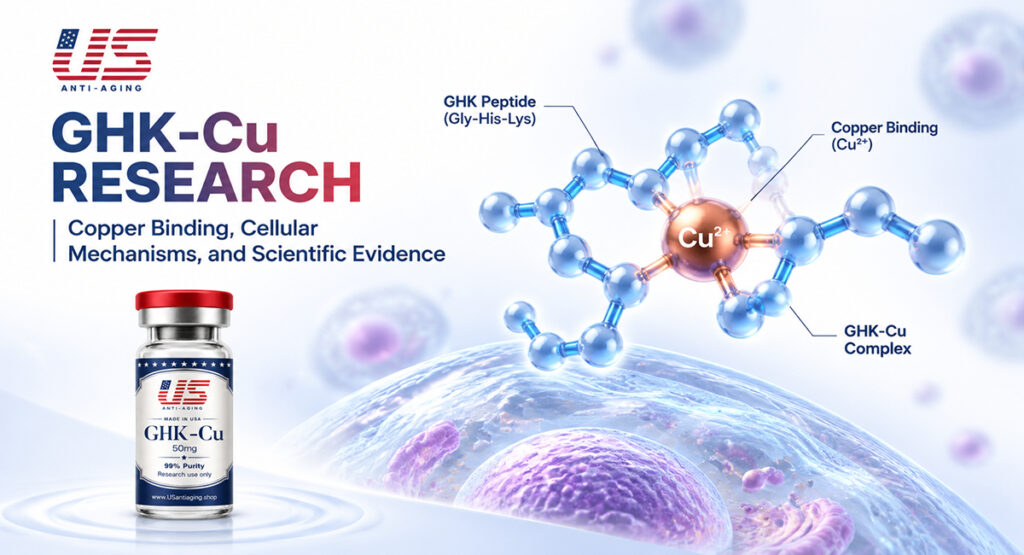
GHK-Cu research investigates a copper-binding tripeptide complex for its molecular interactions, cellular signaling, gene expression, and extracellular matrix regulation. GHK consists of three amino acids: glycine, histidine, and lysine. When it coordinates with copper(II) ions, it forms a complex with distinct chemical and biological properties. Scientists study GHK-Cu to understand how peptide-metal interactions influence cellular […]
Peptides in Skin Research: Biological Mechanisms, Skin Structure, and Scientific Evidence
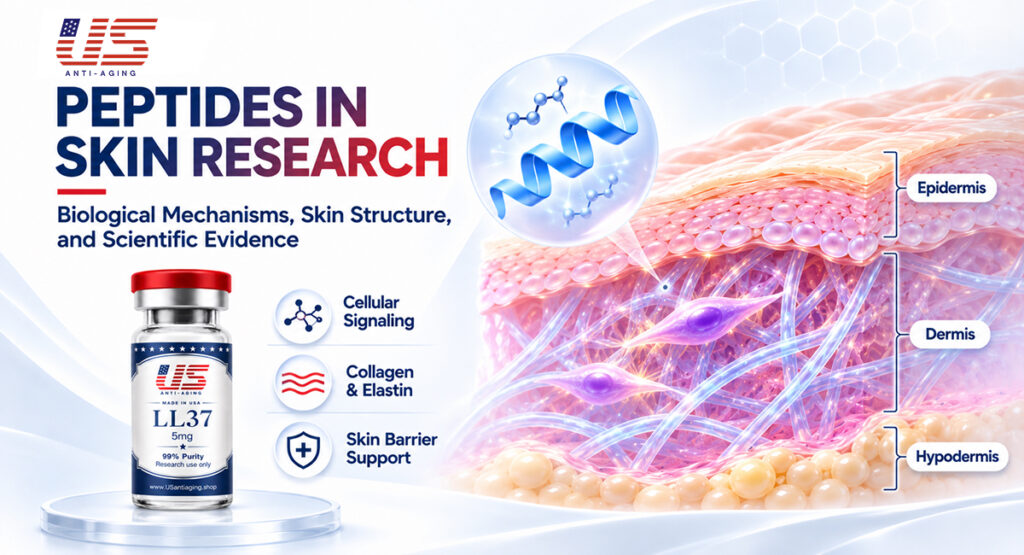
Peptides in skin research are investigated for their interactions with skin cells, extracellular matrix components, pigmentation pathways, and innate immune responses. Scientists study compounds such as GHK-Cu, Melanotan II, and LL-37 to understand how distinct molecular structures influence fibroblast activity, melanogenesis, and epithelial defense mechanisms. However, peptides do not share a universal mechanism of action. […]