Peptides in Skin Research: Biological Mechanisms, Skin Structure, and Scientific Evidence



Peptides in skin research are investigated for their interactions with skin cells, extracellular matrix components, pigmentation pathways, and innate immune responses. Scientists study compounds such as GHK-Cu, Melanotan II, and LL-37 to understand how distinct molecular structures influence fibroblast activity, melanogenesis, and epithelial defense mechanisms.
However, peptides do not share a universal mechanism of action. Their biological responses depend on molecular identity, cellular targets, formulation, and experimental conditions.
Furthermore, findings from laboratory models cannot automatically establish cosmetic benefits, clinical effectiveness, or human safety.
For additional information about peptide chemistry and experimental biology, explore the educational resources available at US Anti-Aging
What Are Peptides in Skin Research?
Peptides are short chains of amino acids connected through peptide bonds. Within skin biology, some peptides function as signaling molecules, while others participate in immune defense, metal coordination, or receptor activation.
Researchers investigate both naturally occurring peptides and synthetic analogs to understand their interactions with different skin structures.
Understanding the Structure of the Skin
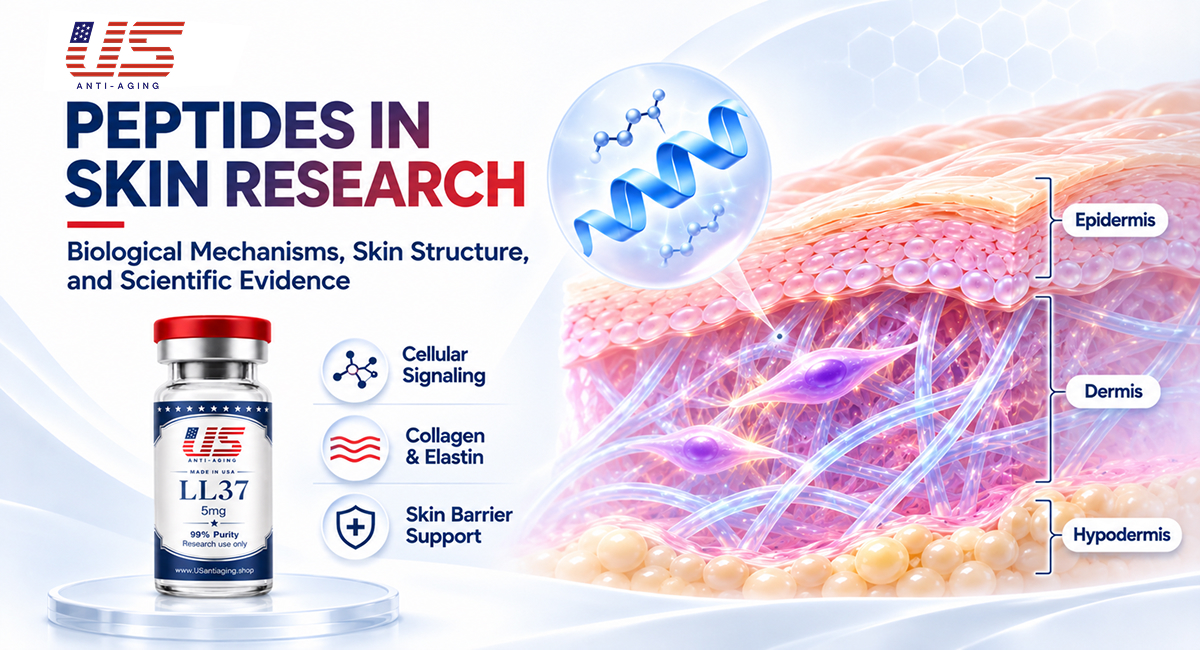
The skin contains three principal anatomical levels, each with distinct biological characteristics.
| Skin layer | Main characteristics | Research relevance |
|---|---|---|
| Epidermis | Keratinocytes, melanocytes, protective barrier | Pigmentation, epithelial signaling, barrier function |
| Dermis | Fibroblasts, collagen, elastin, blood vessels | Matrix organization and mechanical properties |
| Hypodermis | Adipose and connective tissue | Metabolic signaling and structural support |
Importantly, the stratum corneum, which forms the outermost epidermal layer, restricts the penetration of many externally applied molecules.
Consequently, peptides in skin research require careful consideration of both molecular activity and the ability to reach relevant cellular targets.
How Do Peptides Interact With Skin Cells?
Peptides interact with skin cells through several mechanisms, including receptor activation, metal coordination, membrane interactions, and intracellular signaling.
However, different cell populations respond to distinct molecular signals.
Fibroblasts and Extracellular Matrix Regulation
Dermal fibroblasts produce collagen, fibronectin, and other extracellular matrix (ECM) components. Researchers examine how peptide exposure influences matrix synthesis, degradation, and cellular organization.
For example, experiments involving GHK-Cu explore interactions between copper coordination and fibroblast-associated biological activity.
Nevertheless, increased matrix production alone does not establish improved skin structure.
Keratinocytes and Epidermal Defense
Keratinocytes represent the predominant cell population in the epidermis. In addition to forming the protective barrier, they produce signaling molecules involved in immune communication.
Researchers investigate host-defense peptides such as LL-37 to understand antimicrobial responses and inflammatory regulation within epithelial environments.
Melanocytes and Receptor Signaling
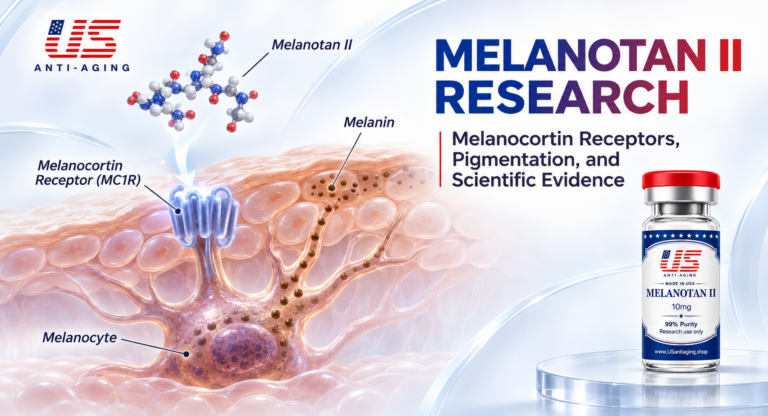
Melanocytes produce melanin within specialized organelles called melanosomes. These organelles transfer pigment to surrounding keratinocytes.
Furthermore, melanocortin 1 receptor (MC1R) signaling helps regulate melanocyte activity and pigment production.
Within peptides in skin research, melanocortin-related compounds provide a framework for investigating receptor-dependent cellular responses.
How Do Collagen and Melanin Affect Skin Biology?
Collagen and melanin contribute to different aspects of skin biology. While collagen primarily supports tissue architecture, melanin influences pigmentation and interactions with ultraviolet radiation.
Understanding this distinction helps researchers select appropriate experimental endpoints.
Collagen and Dermal Structure
Type I and type III collagen contribute significantly to the structural organization of the dermis. However, skin mechanical properties also depend on elastin, matrix hydration, collagen alignment, and protein cross-linking.
Researchers therefore investigate several aspects of collagen biology:
- Collagen-related gene expression.
- Protein synthesis and deposition.
- Extracellular matrix degradation.
- Collagen fiber organization.
- Tissue elasticity and mechanical strength.
Importantly, collagen abundance does not independently determine skin functionality.
Melanin and Pigmentation Pathways
Melanin exists primarily in two forms: eumelanin and pheomelanin. These pigments differ in their chemical characteristics and interactions with ultraviolet radiation.
MC1R activation influences intracellular cyclic adenosine monophosphate (cAMP) signaling and melanogenesis. Additionally, genetic differences in MC1R can affect pigmentation and cellular responses to ultraviolet-induced DNA damage (Guida et al., 2022).
However, increased pigmentation does not independently establish adequate photoprotection or reduced skin cancer risk.
Which Peptides Are Studied in Skin Research?
Several peptides in skin research have attracted scientific interest because they address different cellular and molecular processes.
GHK-Cu: Copper Binding and Fibroblast Activity
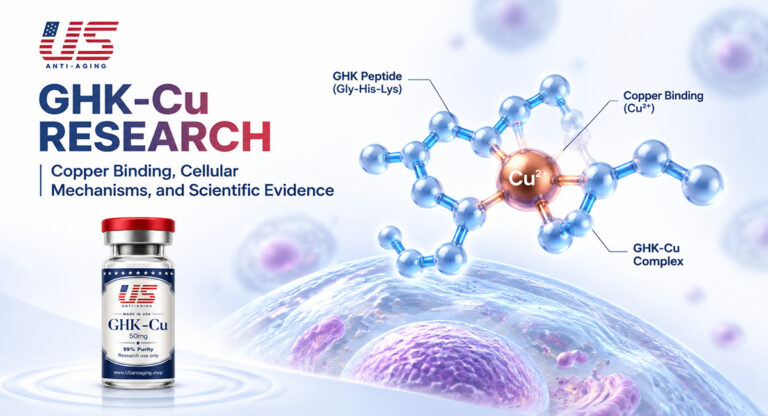
GHK-Cu is a coordination complex consisting of glycine, histidine, and lysine associated with copper(II) ions.
A foundational laboratory study reported increased collagen synthesis in cultured fibroblasts following GHK-Cu exposure (Maquart et al., 1988).
However, this finding does not establish equivalent outcomes in intact human skin. Researchers must also distinguish copper-dependent activity from the independent effects of the GHK peptide.
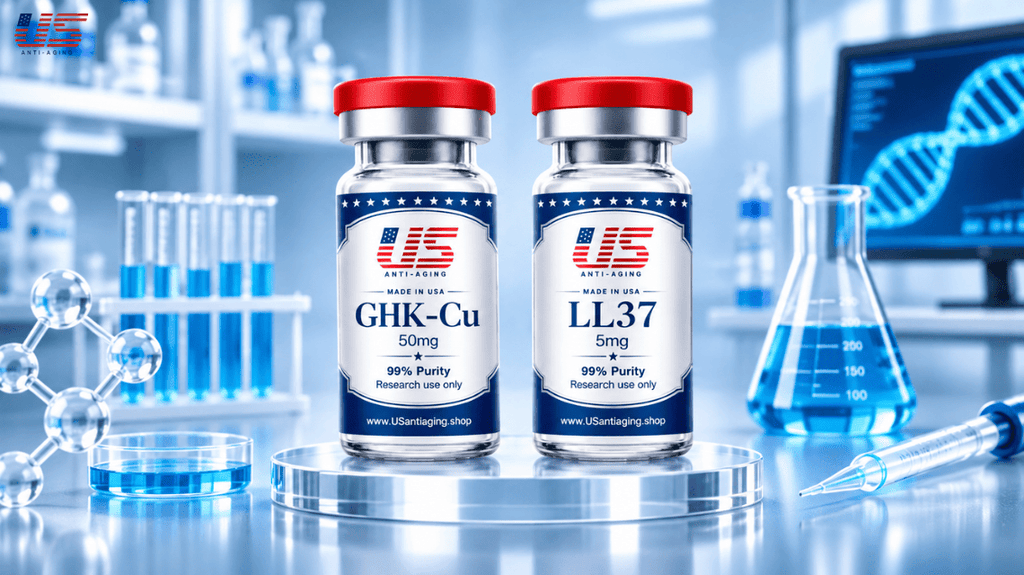
For laboratories investigating collagen synthesis, fibroblast activity, and extracellular matrix regulation, explore GHK-Cu Peptide for Research at US Anti-Aging, intended strictly for scientific and laboratory research.
Melanotan II: Melanocortin Receptor Research
Melanotan II is a synthetic cyclic heptapeptide derived from the molecular framework of alpha-melanocyte-stimulating hormone (α-MSH).
Scientists investigate its activity across several melanocortin receptor subtypes, including MC1R, which participates in pigmentation signaling.
An early Phase I pilot investigation documented pigmentation changes alongside systemic adverse effects in a small group of human participants (Dorr et al., 1996).
Nevertheless, Melanotan II lacks FDA approval, and its broad receptor activity presents significant safety concerns.
For laboratories investigating melanocortin receptor signaling, melanin production, and melanocyte activity, explore Melanotan II for Research at US Anti-Aging, intended strictly for scientific and laboratory research.
LL-37: Antimicrobial Activity and Innate Immunity
LL-37 is a naturally occurring 37-amino-acid host-defense peptide belonging to the cathelicidin family.
Researchers examine its microbial membrane interactions, epithelial responses, and immune signaling.
Interestingly, research has also demonstrated that LL-37 can facilitate recognition of self-DNA through toll-like receptor 9 (TLR9), contributing to inflammatory mechanisms associated with psoriasis (Lande et al., 2007).
Therefore, its biological activity cannot be characterized as universally protective or anti-inflammatory.
For laboratories examining antimicrobial mechanisms, epithelial barrier function, and innate immune responses, explore LL-37 Peptide for Research at US Anti-Aging, intended strictly for scientific investigation.
Comparing Peptides in Skin Research
| Research compound | Molecular classification | Primary research focus |
|---|---|---|
| GHK-Cu | Copper-binding tripeptide complex | Fibroblast activity and matrix regulation |
| Melanotan II | Synthetic cyclic heptapeptide | Melanocortin signaling and pigmentation |
| LL-37 | Human cathelicidin peptide | Antimicrobial mechanisms and innate immunity |
Each compound requires separate scientific evaluation because its molecular targets and evidence limitations differ.
What Does Current Scientific Evidence Show?
Current evidence concerning peptides in skin research includes cellular experiments, reconstructed skin models, animal investigations, and selected human clinical trials.
However, the strength of evidence varies considerably between compounds and formulations.
Experimental Models and Their Limitations
Researchers use complementary methods to investigate skin-associated peptide activity.
| Research method | Primary measurement | Main limitation |
|---|---|---|
| Fibroblast cultures | Collagen and matrix-related activity | Limited tissue complexity |
| Melanocyte cultures | Melanin production and receptor signaling | Cannot establish whole-skin responses |
| Reconstructed skin models | Cellular organization and barrier characteristics | Limited systemic physiology |
| Skin permeation studies | Molecular penetration and distribution | Penetration does not establish effectiveness |
| Human clinical trials | Defined clinical outcomes and safety | Formulation-specific findings |
Consequently, reliable interpretation requires connecting molecular observations with appropriate structural and functional measurements.
Human Evidence and Formulation-Specific Findings
A 2026 systematic review and meta-analysis examined 19 randomized controlled trials involving 1,341 participants. The authors reported improvements in selected skin measurements, particularly hydration and brightness, with a modest pooled effect on wrinkles among the oral and topical peptide formulations investigated (Nukaly et al., 2026).
However, these findings cannot establish equivalent effects for GHK-Cu, Melanotan II, LL-37, or other research compounds.
Furthermore, a Phase IIb clinical trial involving 148 participants with difficult-to-heal venous leg ulcers found no statistically significant overall healing improvement with topical LL-37 compared with placebo (Mahlapuu et al., 2021).
These results illustrate why individual formulations require direct clinical evaluation.
Current Evidence and Safety Gaps
The FDA identifies potential safety concerns involving Melanotan II, LL-37, and injectable GHK-Cu. These include insufficient human safety information, potential immunogenicity, peptide-related impurities, and compound-specific adverse effects (FDA, 2026).
Therefore, peptides in skin research should not be considered clinically interchangeable with approved medicines or tested cosmetic formulations.
FAQs About Peptides in Skin Research
1. What are peptides in skin research?
They are amino acid-based molecules investigated for their interactions with skin cells, collagen metabolism, pigmentation pathways, barrier function, and immune signaling.
2. Which peptides are commonly studied in skin biology?
GHK-Cu, Melanotan II, and LL-37 are examples investigated in matrix regulation, melanocortin receptor signaling, and innate immune research.
3. How are peptides related to collagen synthesis?
Certain peptides influence collagen-associated cellular activity under experimental conditions. However, increased collagen synthesis does not independently establish improved skin structure or clinical benefits.
4. Can all peptides penetrate the skin barrier?
No. Skin penetration depends on molecular size, charge, chemical characteristics, formulation, and barrier integrity. Each compound requires individual evaluation.
5. Are research peptides approved for human skin applications?
Research-use-only materials are not approved medical treatments. Evidence involving specific cosmetic or pharmaceutical formulations cannot establish the safety of unrelated research products.
Conclusion: Understanding Peptides in Skin Research
Peptides in skin research provide valuable insights into fibroblast regulation, collagen metabolism, melanocortin signaling, and epithelial immune responses.
Although GHK-Cu, Melanotan II, and LL-37 demonstrate distinct biological activities, their evidence remains compound-specific and dependent on experimental conditions.
Consequently, meaningful scientific interpretation requires verified molecular identities, appropriate research models, and careful evaluation of clinical and safety limitations.
For further educational information about peptide mechanisms and experimental biology, explore the scientific resources available at US Anti-Aging
Disclaimer: All compounds and information presented in this article are intended strictly for scientific research and educational purposes. These products are not approved for medical use and are not intended for human or veterinary use, diagnosis, treatment, or prevention of any disease.