
GHK-Cu Research: Copper Binding, Cellular Mechanisms, and Scientific Evidence
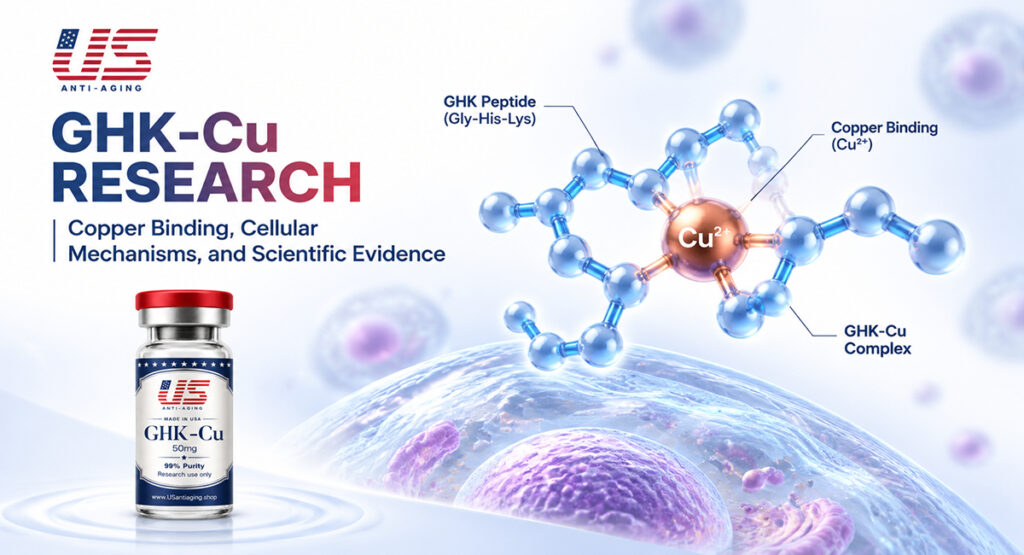
GHK-Cu research investigates a copper-binding tripeptide complex for its molecular interactions, cellular signaling, gene expression, and extracellular matrix regulation. GHK consists of three amino acids: glycine, histidine, and lysine. When it coordinates with copper(II) ions, it forms a complex with distinct chemical and biological properties. Scientists study GHK-Cu to understand how peptide-metal interactions influence cellular […]
Peptides in Skin Research: Biological Mechanisms, Skin Structure, and Scientific Evidence
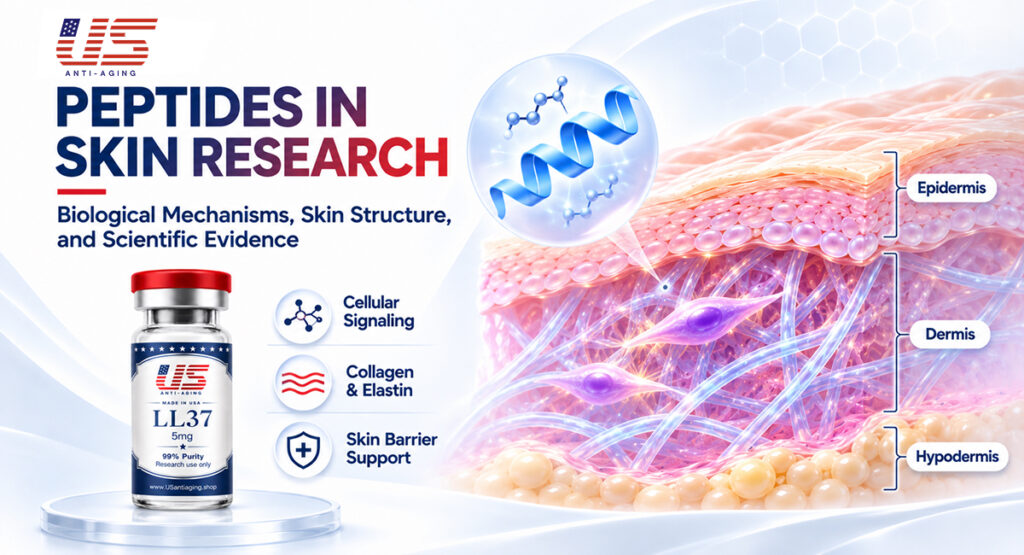
Peptides in skin research are investigated for their interactions with skin cells, extracellular matrix components, pigmentation pathways, and innate immune responses. Scientists study compounds such as GHK-Cu, Melanotan II, and LL-37 to understand how distinct molecular structures influence fibroblast activity, melanogenesis, and epithelial defense mechanisms. However, peptides do not share a universal mechanism of action. […]
Peptides and Tissue Remodeling: Extracellular Matrix, Collagen, and Cellular Research
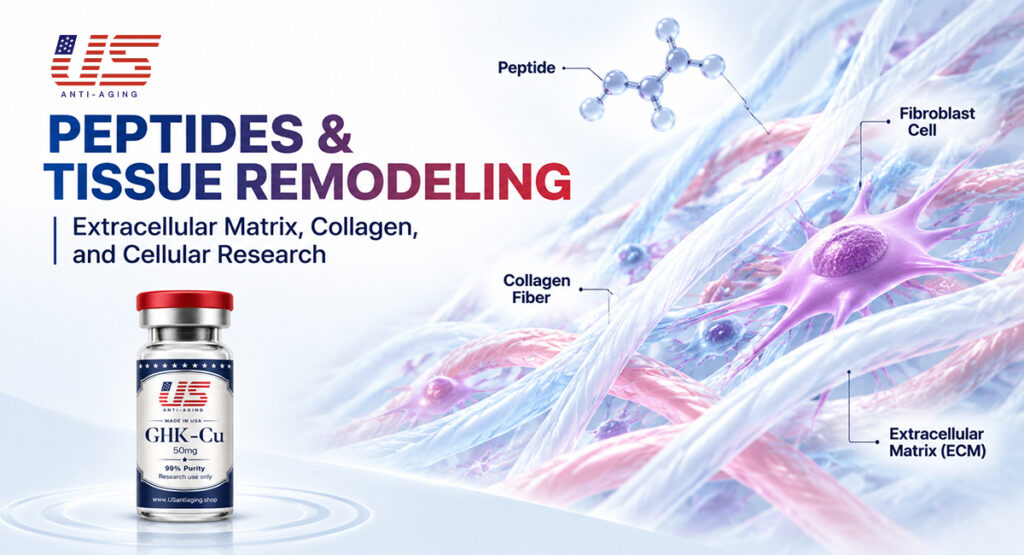
Peptides and tissue remodeling represent an area of biological research examining how peptide molecules interact with fibroblasts, collagen metabolism, extracellular matrix (ECM) organization, and cellular signaling. Scientists investigate whether specific peptides influence matrix synthesis, protein degradation, cellular adhesion, and the structural properties of experimental tissues. However, tissue remodeling requires a balance between matrix production and […]
GLOW Peptide Blend Research: Composition, Molecular Characteristics, and Evidence Limitations
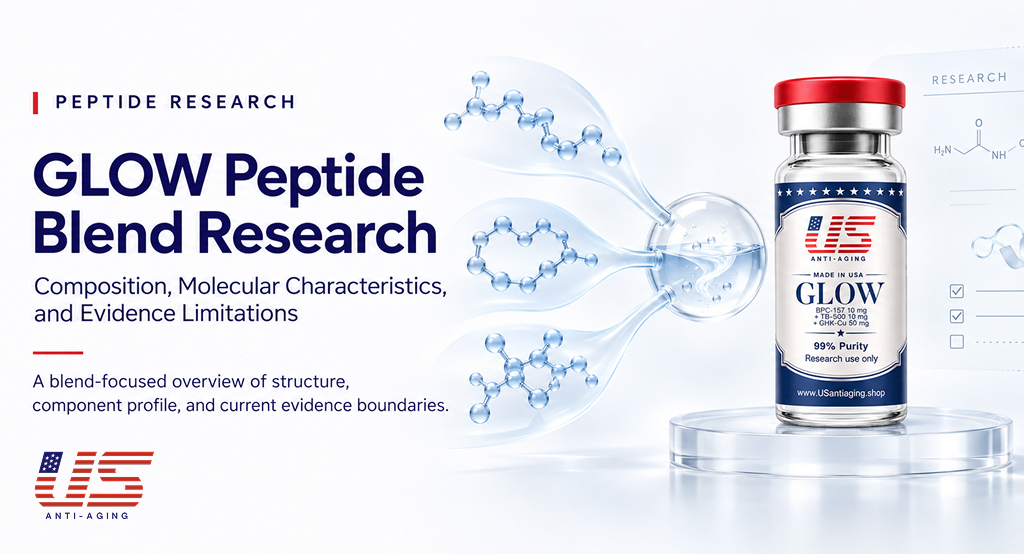
GLOW Peptide Blend Research examines multi-peptide formulations commonly combining GHK-Cu, BPC-157, and TB-500. These compounds have distinct molecular structures and experimental research backgrounds involving extracellular matrix activity, cellular signaling, and peptide metabolism. However, GLOW is a formulation name rather than a standardized scientific compound. Its ingredients and concentrations can vary, and evidence involving individual peptides […]
Peptides in Tissue Repair Research: Biological Mechanisms and Current Evidence
Peptides in tissue repair research are investigated for their potential roles in cellular communication, inflammation regulation, extracellular matrix remodeling, and tissue regeneration. Scientists examine how these molecules influence fibroblast activity, cell migration, angiogenesis, and other biological processes involved in repairing damaged tissues. However, not all peptides act through the same mechanisms, and most investigational compounds […]