
Top 4 Peptides for Recovery Research: Mechanisms and Scientific Evidence
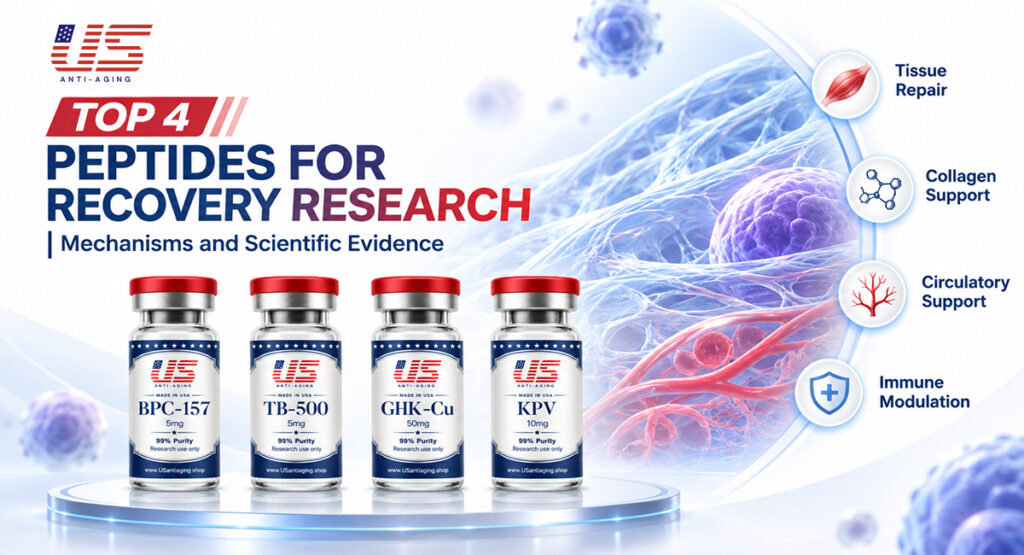
The top peptides for recovery research featured in this article are BPC-157, TB-500, KPV, and the GLOW peptide blend. Scientists investigate these compounds in connection with cellular migration, inflammatory signaling, vascular responses, and extracellular matrix remodeling. However, each compound has a different molecular structure, experimental purpose, and level of scientific evidence. While BPC-157 has a […]
Peptides and Inflammation Research: Cytokine Signaling and Preclinical Evidence
Peptides and inflammation research examines how peptide molecules interact with immune signaling, cytokine production, and cellular processes associated with inflammatory responses. Scientists investigate whether specific peptides influence pathways such as nuclear factor kappa B (NF-κB), mitogen-activated protein kinases (MAPKs), and receptor-mediated immune communication. However, peptides do not share a universal inflammatory mechanism. Their activities depend […]
KPV Peptide Research: Molecular Structure, Inflammatory Signaling, and Preclinical Evidence
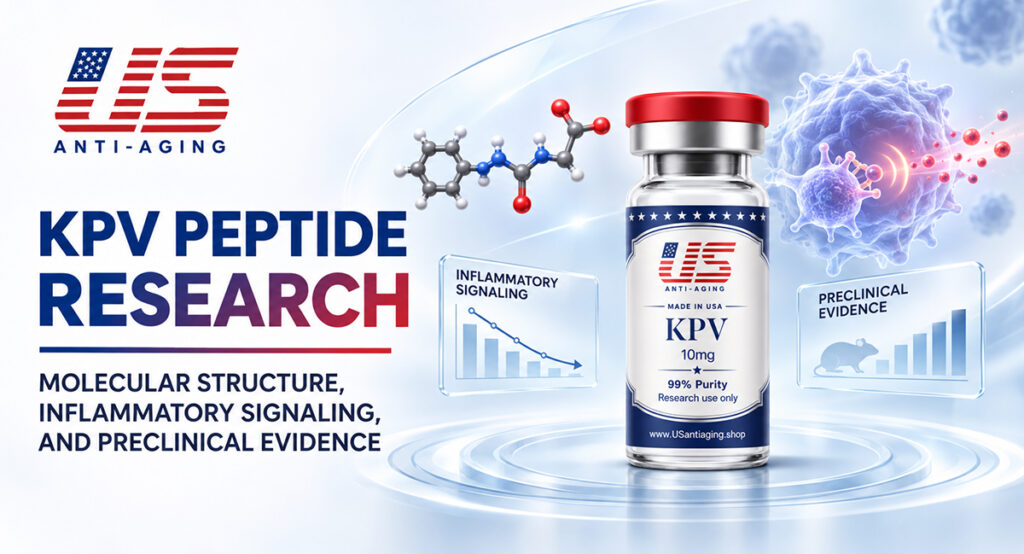
KPV Peptide Research investigates a three-amino-acid peptide derived from alpha-melanocyte-stimulating hormone (α-MSH). Scientists study KPV, or lysine-proline-valine, for its effects on inflammatory signaling, intestinal epithelial cells, and experimental models of tissue inflammation. Laboratory findings suggest that KPV can influence NF-κB and MAPK signaling, although its precise molecular targets remain incompletely understood. Importantly, existing evidence comes […]