Cell Signaling Pathways: How Cells Communicate and Respond to Molecular Signals

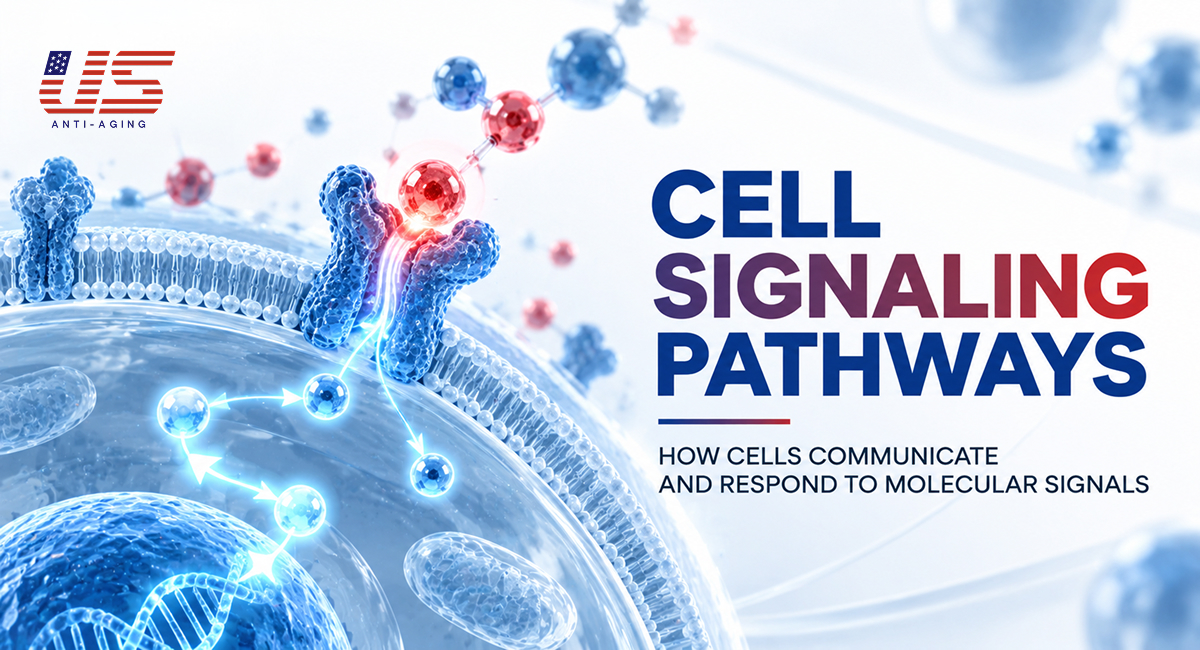


Cell signaling pathways are molecular communication networks that allow cells to detect signals, transmit information, and coordinate biological responses. These pathways involve receptors, signaling proteins, second messengers, and regulatory enzymes that convert chemical or physical stimuli into cellular activity.
Through signal transduction, cells regulate processes such as metabolism, growth, differentiation, immune communication, and gene expression. However, the resulting response depends on receptor specificity, signaling intensity, and the surrounding cellular environment.
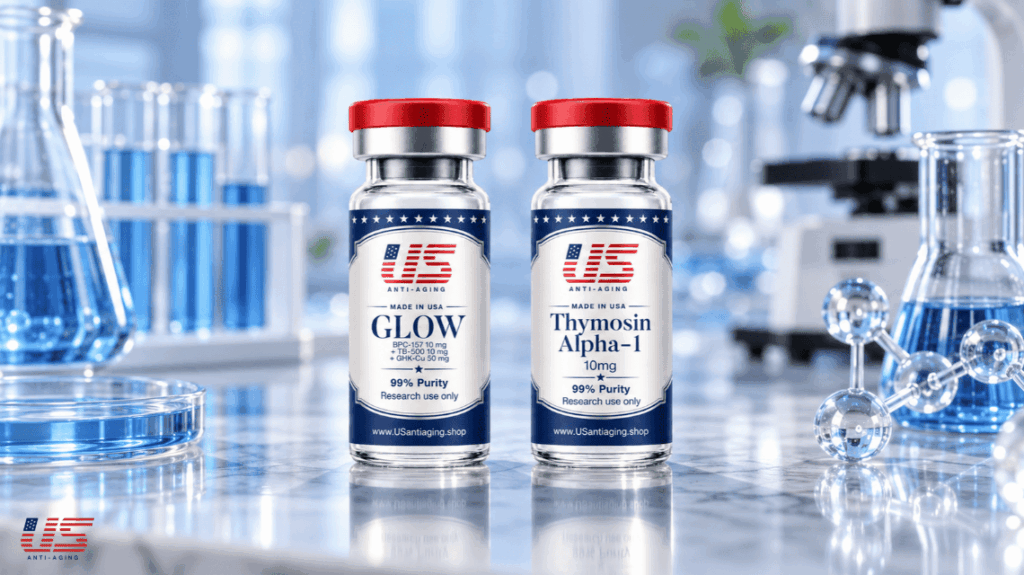
For laboratories investigating molecular communication, US Anti-Aging provides research compounds intended for controlled scientific investigation.
This article explores the major signaling mechanisms, molecular components, and laboratory techniques researchers use to understand cellular responses.
What Are Cell Signaling Pathways and Why Are They Important?
Cell signaling pathways are coordinated sequences of molecular interactions that allow cells to receive information and respond to internal or external conditions.
These networks help maintain cellular organization by connecting environmental signals with biochemical activity.
For example, signaling molecules may influence enzyme function, protein production, or cellular movement. However, the same molecular signal can produce different responses depending on the receiving cell.
The Biological Importance of Cellular Communication
Multicellular organisms depend on communication between specialized cell populations.
Without coordinated signaling, tissues could not properly regulate growth, metabolism, or responses to environmental changes.
Major functions of cellular communication include:
- Cell growth and division: Regulating progression through the cell cycle.
- Metabolic regulation: Coordinating energy utilization and nutrient responses.
- Immune communication: Supporting interactions between immune-related cells.
- Cell differentiation: Influencing cellular specialization.
- Stress responses: Coordinating adaptations to changing conditions.
- Gene regulation: Modifying transcriptional activity in response to molecular signals.
Importantly, these functions involve interconnected signaling networks rather than completely independent pathways.
How Cells Interpret Molecular Information
Cells respond according to the receptors and intracellular proteins they express.
Consequently, two different cell populations may interpret the same signaling molecule differently.
For instance, growth factor signaling can activate several downstream molecular networks, depending on receptor activity and cellular context.
Research into receptor tyrosine kinases demonstrates how extracellular signals initiate complex intracellular responses through coordinated molecular interactions (Lemmon & Schlessinger, 2010).
How Do Cells Receive and Transmit Molecular Signals?
Cellular communication generally begins when a signaling molecule interacts with a compatible receptor.
This interaction initiates signal transduction, allowing information to move through intracellular molecular networks.
However, receptor activation represents only the beginning of a multi-stage regulatory process.
The Main Stages of Signal Transduction
A simplified signaling sequence involves five stages:
- Signal recognition: A receptor detects a compatible signaling molecule.
- Receptor activation: Molecular binding changes receptor activity or conformation.
- Signal transmission: Intracellular proteins relay information.
- Cellular response: The cell modifies a specific biological process.
- Signal termination: Regulatory mechanisms reduce or stop signaling activity.
These stages help maintain controlled communication and prevent prolonged activation.
Different Forms of Cellular Communication
Cells communicate through several mechanisms.
Endocrine signaling involves molecules traveling through circulation to distant target tissues. In contrast, paracrine signaling allows molecules to influence nearby cells.
Meanwhile, autocrine signaling occurs when cells respond to signals they release themselves.
Direct cell-to-cell contact also supports juxtacrine signaling, where membrane-associated molecules participate in communication.
These mechanisms differ primarily in how signals reach their targets, although they may activate overlapping intracellular pathways.
What Are the Main Types of Cell Signaling Pathways?
Scientists classify cell signaling pathways according to their molecular components, receptor systems, and downstream regulatory mechanisms.
Several major pathways have become central to molecular biology research because they influence fundamental cellular functions.
Major Signaling Pathways and Their Biological Roles
| Signaling pathway | Main molecular components | Biological functions |
|---|---|---|
| MAPK/ERK | RAS, RAF, MEK, ERK | Cell proliferation, differentiation, and responses to stimuli |
| PI3K/AKT | PI3K, PIP3, AKT, mTOR-associated networks | Metabolism, cellular growth, and survival signaling |
| JAK/STAT | Cytokine receptors, JAK proteins, STAT transcription factors | Immune communication and gene regulation |
| cAMP/PKA | Adenylyl cyclase, cAMP, protein kinase A | Hormonal signaling and metabolic regulation |
| Calcium signaling | Calcium channels, intracellular stores, calcium-binding proteins | Secretion, contraction, and cellular regulation |
| Wnt/β-catenin | Wnt ligands, Frizzled receptors, β-catenin | Development, cell fate, and tissue organization |
Although researchers often examine these pathways individually, substantial molecular communication occurs between them.
MAPK/ERK Signaling
The mitogen-activated protein kinase pathway contains protein kinase cascades that transmit and amplify molecular signals.
Within the classical ERK pathway, RAS-associated signaling can activate RAF, followed by MEK and ERK.
Activated ERK then influences downstream proteins and transcriptional regulators.
Studies identify MAPK cascades as major regulators of cellular proliferation, differentiation, and stress-related responses (Morrison, 2012).
PI3K/AKT Signaling
The PI3K/AKT pathway participates in metabolic regulation, growth-associated signaling, and cellular survival mechanisms.
Following activation by appropriate upstream signals, PI3K generates phosphoinositide molecules that help recruit signaling proteins to cellular membranes.
This process can facilitate AKT activation and influence downstream regulatory networks.
Scientific research highlights the diverse roles of PI3K signaling in normal cellular metabolism and immune function (Fruman et al., 2017).
JAK/STAT and Other Regulatory Networks
The JAK/STAT pathway links signaling from certain cytokine receptors to changes in gene expression.
Following appropriate receptor activation, JAK proteins phosphorylate STAT proteins, which can regulate transcription after entering the nucleus.
Other networks, including Wnt and calcium-dependent signaling, contribute to developmental processes and specialized cellular functions.
Therefore, researchers select specific pathways according to their experimental questions rather than assuming one pathway controls every biological response.
How Do Receptors and Second Messengers Activate Cellular Responses?
Receptors serve as molecular recognition systems that connect signaling molecules with intracellular regulatory machinery.
However, many extracellular signals cannot directly cross cellular membranes.
Instead, receptors initiate biochemical changes that allow information to reach intracellular targets.
Major Classes of Cellular Receptors
Researchers commonly investigate three receptor categories.
G protein-coupled receptors (GPCRs) interact with heterotrimeric G proteins and can regulate enzymes or ion channels.
Receptor tyrosine kinases (RTKs) participate in signaling through protein phosphorylation and recruitment of intracellular signaling proteins.
Intracellular receptors recognize certain molecules capable of reaching intracellular compartments and may directly influence gene regulation.
These receptor systems differ in their activation mechanisms and downstream molecular interactions.
The Role of Second Messengers
Second messengers are intracellular molecules that transmit signals initiated by receptor activation.
Common examples include:
- cAMP: Participates in the activation of protein kinase A and other signaling effectors.
- Calcium ions (Ca²⁺): Regulate calcium-sensitive proteins and cellular processes.
- Inositol trisphosphate (IP3): Helps release calcium from intracellular stores.
- Diacylglycerol (DAG): Participates in the regulation of certain protein kinase C isoforms.
Because second messengers can influence multiple intracellular targets, they help coordinate signaling responses.
Foundational research established the importance of G proteins in transmitting receptor-generated signals to intracellular effectors (Gilman, 1987).
Why Signal Regulation Matters
Cell signaling requires both activation and termination.
For example, phosphatases remove phosphate groups from specific proteins, while phosphodiesterases degrade cyclic nucleotide messengers.
Additionally, receptor internalization and negative feedback can reduce signaling intensity.
These regulatory processes help cells maintain appropriate responses and limit excessive or prolonged pathway activity.
To better understand how peptide structure influences biological activity, explore our comprehensive guide, How Do Peptides Work?, covering receptor interactions, cellular signaling pathways, and the molecular mechanisms involved in peptide research.

How Are Cell Signaling Pathways Studied in Molecular Biology?
Researchers investigate cell signaling pathways using biochemical assays, cellular models, molecular imaging, and gene expression analysis.
Because signaling networks contain numerous interacting components, scientists often combine experimental methods to examine different stages of signal transduction.
Common Laboratory Techniques
1. Western blot analysis
Researchers use Western blotting to investigate protein abundance and selected phosphorylation states. This approach can help identify changes associated with pathway activation.
2. Reporter-gene assays
Reporter systems measure changes in transcriptional activity associated with particular signaling mechanisms. However, reporter activity may reflect several upstream processes.
3. Flow cytometry
Flow cytometry measures selected molecular characteristics across individual cells, including signaling-associated protein markers.
4. Fluorescence microscopy
Fluorescence imaging allows scientists to observe protein localization, intracellular movement, and certain signaling events.
5. Gene expression analysis
Quantitative PCR and RNA sequencing help researchers examine changes in gene expression following experimental stimulation.
Interpreting Experimental Results
A single measurement rarely establishes the complete activity of a signaling pathway.
For example, increased phosphorylation of one protein may indicate altered signaling, but it does not necessarily prove that every downstream component has become activated.
Therefore, researchers use appropriate controls, time-course measurements, and complementary assays to strengthen their conclusions.
Furthermore, cell type, experimental conditions, and biological variability can influence observed responses.
Laboratories investigating peptide-related signaling mechanisms can explore research compounds through US Anti-Aging while evaluating materials according to their intended experimental applications.
FAQs About Cell Signaling Pathways
1. What are cell signaling pathways?
Cell signaling pathways are molecular networks that allow cells to recognize signals and coordinate biological responses.
They involve receptors, intracellular proteins, regulatory enzymes, and signaling molecules that transmit information within or between cells.
2. What are the main types of cell signaling?
Major communication types include endocrine, paracrine, autocrine, and contact-dependent signaling.
These categories describe how signals travel between cells rather than identifying specific intracellular biochemical pathways.
3. What is the role of receptors in cell signaling?
Receptors recognize compatible signaling molecules and initiate molecular changes that influence intracellular activity.
Different receptor families use distinct mechanisms to transmit information.
4. Why are second messengers important?
Second messengers help relay or amplify information from activated receptors to intracellular proteins.
Examples include cAMP, calcium ions, IP3, and DAG.
5. How do scientists measure cell signaling activity?
Scientists use techniques such as Western blotting, fluorescence microscopy, flow cytometry, and reporter-gene assays.
Combining multiple measurements helps researchers evaluate pathway activation and downstream cellular responses.
Conclusion: Understanding Cell Signaling Pathways in Molecular Research
Understanding cell signaling pathways provides essential insight into how cells recognize molecular information and coordinate biological responses.
Receptors, second messengers, protein kinases, and regulatory proteins form interconnected networks that influence metabolism, growth, differentiation, and gene expression. However, pathway activity depends on cellular context, experimental conditions, and multiple interacting regulatory mechanisms.
As molecular biology research advances, combining biochemical analysis with cell-based experiments helps scientists develop more accurate models of cellular communication.
For laboratories investigating molecular signaling and peptide-related mechanisms, US Anti-Aging offers research compounds intended for scientific investigation.
Disclaimer: All compounds and information presented in this article are intended strictly for scientific research and educational purposes. These products are not approved for medical use and are not intended for human or veterinary use, diagnosis, treatment, or prevention of any disease.